Yes and no. When you’re weighing up a sole trader vs limited company bathroom fitters, the business structure itself tells you almost nothing about the quality of work you’ll get. What it does affect is insurance, accountability, and what happens if things go wrong halfway through a job. Here in Wolverhampton, you’ll find excellent tradespeople working both ways, and you’ll also find unreliable ones hiding behind a smart-sounding limited company name. The real question isn’t sole trader or limited company bathroom fitter, it’s whether you choose trusted bathroom fitters in Wolverhampton who are properly insured, genuinely qualified, and easy to hold accountable if something goes wrong. That’s the real lens for comparing sole trader vs limited company bathroom fitter options.
Let’s break it down properly so you can make the right call for your bathroom renovation.
What’s the Difference Between a Sole Trader and Limited Company Bathroom Fitters?
A sole trader is simply a self-employed person trading under their own name or a business name. There’s no legal separation between them and their business. They register with HMRC, complete an annual Self Assessment tax return, and pay Income Tax and National Insurance on what they earn. If the business runs into debt or legal trouble, the individual is personally liable.
A limited company is a separate legal entity. It’s registered at Companies House, has a director (often the fitter themselves), and pays Corporation Tax rather than Income Tax. Because the company is legally distinct from the person running it, personal assets like a house or savings have an extra layer of protection if something goes seriously wrong with the business.
Neither structure says anything about skill level, the quality of finish, or how long someone has been fitting bathrooms. A brilliant fitter can be a sole trader for thirty years. A poor one can set up a limited company in an afternoon.
Does It Matter Who Fits Your Bathroom: Sole Trader vs Limited Company Bathroom Fitter?
When it comes to a sole trader vs limited company bathroom fitters, does it actually matter which one you hire? For most homeowners comparing a sole trader vs limited company bathroom fitter, the structure matters less than three practical things underneath it.
Insurance. Both sole traders and limited companies can hold public liability insurance , and both should have it. What changes is that a limited company employing staff is legally required to carry employer’s liability insurance, while a sole trader working alone isn’t. If your fitter brings a mate along to help, ask who that person works for and whether they’re covered.
Continuity. If your fitter is a sole trader and falls ill or gets injured midway through your bathroom fitting, the job stops until they’re back. A small limited company with two or three fitters can usually cover that gap. This matters more on a full bathroom renovation than on a quick shower or tap swap.
Paperwork trail. A limited company leaves a public record at Companies House, including filing history and registered address. A sole trader doesn’t have to file anything publicly, which makes background checks slightly harder, though far from impossible.
None of this means one structure is automatically better. It means you should ask different questions depending on which one you’re dealing with.
Pros and Cons of a Sole Trader Bathroom Fitter in Wolverhampton
Sole traders are still the most common setup among bathroom fitters across Wolverhampton and the wider Black Country, and there are good reasons for that.
Pros
- Often more cost effective, partly because many sit below the VAT threshold and don’t add VAT to your invoice
- You’re usually dealing directly with the person actually doing the work, not a salesperson or project manager
- Tends to come with a more personal, flexible approach to your project
- Lower overheads can mean more competitive quotes on smaller jobs
Cons
- Good ones get booked up fast and waiting times can stretch out
- If they’re ill, on holiday, or take on another job, your renovation pauses
- Less likely to have spare cash to front material costs upfront, so you may need to pay for fittings as you go
- Liability for debts and legal claims sits with that one person, so checking their insurance properly really matters
The Pros and Cons of Hiring a Limited Company Bathroom Fitter
A limited company bathroom fitting business, whether that’s a small local outfit or a larger installation team, brings a different set of trade-offs.
Pros
- Built-in backup if one fitter is unavailable, since there’s usually more than one person on the team
- Easier to verify through the public Companies House record before you commit
- Often better set up to manage bigger renovations involving plumbing, electrics, tiling and plastering under one roof
- Generally has the infrastructure to offer formal written guarantees on workmanship
Cons
- VAT-registered companies add 20% to your bill, which can be a noticeable jump on a full renovation
- More layers between you and the person actually fitting your bathroom, especially if subcontractors are used
- Higher overheads sometimes get reflected in the quote
- Being a limited company doesn’t automatically mean better workmanship, just better structure
What Actually Protects You When Hiring a Bathroom Fitte
Regardless of your sole trader vs limited company bathroom fitter decision these are the things worth checking before you hand over a deposit.
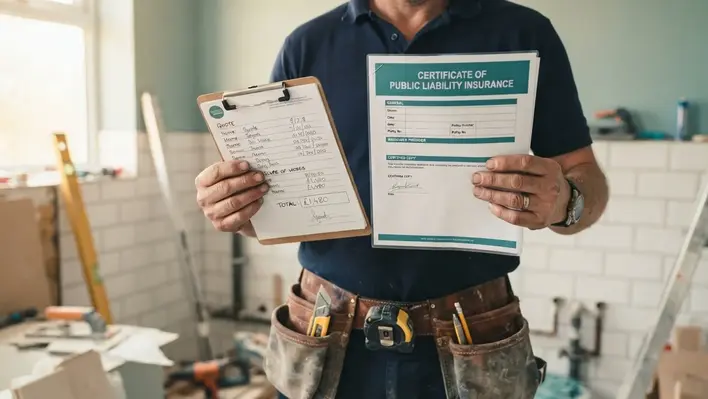
Public liability insurance.
Ask to see the certificate. Any fitter worth hiring will produce one without hesitation.
Trade body membership.
Bodies like exist BiKBBI specifically for kitchen, bedroom and bathroom installers, and membership is a reasonable signal of a fitter who takes the trade seriously.
Building regulations awareness.
Anything affecting plumbing layout, electrics, or ventilation may need building control sign-off. A competent fitter should know this without being prompted.
A proper written quote.
Timeline, total cost, payment schedule and what’s included should all be on paper before work starts. Reputable fitters don’t ask for full payment upfront.
Reviews and a real portfolio.
Recent jobs, ideally local ones you could see in person, tell you far more than a business structure ever will.
How to Check If a Wolverhampton Bathroom Fitter Is a Sole Trader or Limited Company?
You can search any limited company for free on the Companies House register using its name or company number, which shows you filing history, registered address and how long it’s been trading. If a fitter claims to be VAT registered, you can check the VAT number is valid.. And honestly, the simplest method works just as well: ask directly. A fitter who’s confident in their business and their work won’t dodge the question, whatever structure they trade under.
Which Should You Choose in Wolverhampton?
There isn’t a single right answer, because it depends on your project and your priorities. If you’re after a personal touch, a competitive price, and you’re comfortable being a bit more hands on, a sole trader bathroom fitter is often a great fit, especially for smaller jobs. If you want built-in continuity, a formal guarantee, and you’re tackling a larger renovation with plumbing, electrics and tiling all in one job, a limited company bathroom fitting team may suit you better. Either way, the sole trader vs limited company bathroom fitter choice comes down to your project’s scale and priorities.
What should never change is your due diligence. Insurance, trade body membership, a written quote and recent local reviews matter far more than whether the name on the invoice says “Ltd” or not.If you’d rather skip the guesswork altogether, get a free, no-obligation quote from our team.