If you’re planning a bathroom renovation, one of the most common questions homeowners ask is: can a bathroom fitter do electrics? It’s a completely reasonable concern. Bathrooms involve water, and water near electricity is a serious safety matter. Getting the right answer before your project starts could save you time, money, and a genuine safety risk.
The short answer is: it depends on the type of electrical work involved. Some tasks fall within what a competent bathroom fitter can handle. Others must be carried out or at minimum certified by a qualified electrician registered under Part P of the Building Regulations. This page explains exactly what that means for your renovation, what’s legally required, and what a professional bathroom installation service should include from start to finish.
The Short Answer: Can a Bathroom Fitter Do Electrics?
A bathroom fitter can carry out certain types of electrical work but not all of it. Homeowners often wonder can a bathroom fitter do electrics for the full bathroom renovation, and the honest answer is that it depends entirely on what the project involves. The legal position in the UK is clear. Under Part P of the Building Regulations, specific electrical work in bathrooms is classified as notifiable work, meaning it must either be carried out by a registered competent person or inspected and certified by one.
This doesn’t mean your bathroom fitter and your electrician have to be two separate people or two separate companies. Many professional bathroom installation companies employ or work alongside Part P registered electricians, allowing them to offer a genuinely complete service under one roof.
What a Bathroom Fitter Can Legally Do
A skilled and experienced bathroom fitter can legally carry out what is considered minor or low-risk electrical work in certain contexts. This typically includes:
Like-for-like replacement of existing light fittings (where the circuit already exists and no new wiring is required)
Connecting pre-wired bathroom accessories where the supply is already present
Fitting certain extractor fans to an existing switched connection
Even in these situations, the work must meet the requirements of BS 7671 (the IET Wiring Regulations), and the fitter must be competent to carry it out safely. If there is any doubt about competence or compliance, the work should be handed to a qualified electrician.
When You Need a Qualified Electrician
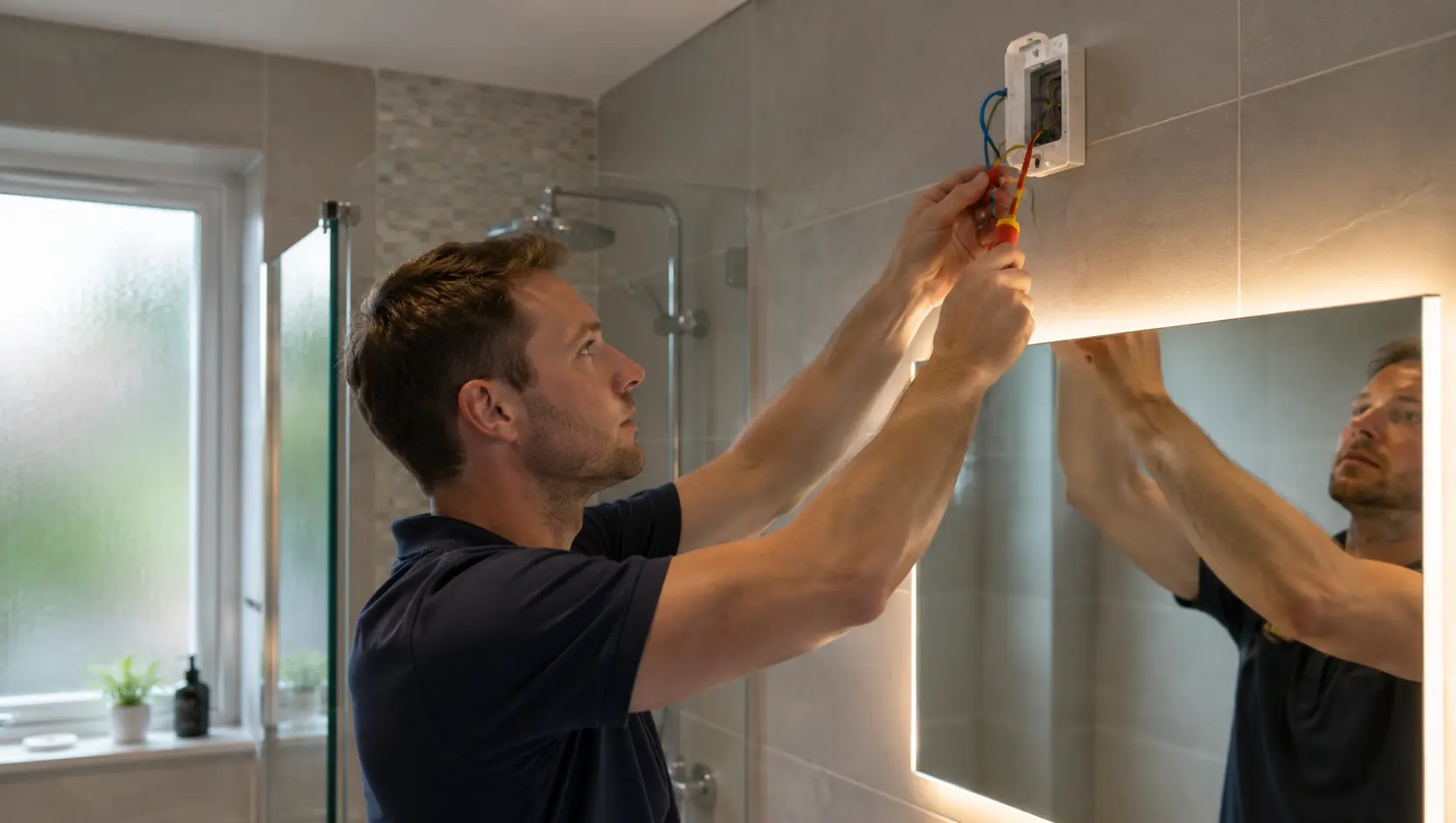
For the majority of bathroom electrical work, you will need a qualified electrician — or a bathroom fitting company that has one on their team. Tasks that require a registered electrician include:
Installing new lighting circuits
Adding new sockets or shaver points
Wiring an electric shower from the consumer unit
Installing underfloor heating systems
Fitting a heated towel rail with its own electrical supply
Installing extractor fans requiring new wiring
Any work involving the consumer unit or main electrical supply
These are notifiable under Part P, and the work must be certified upon completion. Without that certificate, you could face problems when selling your home, making an insurance claim, or passing a mortgage survey.
UK Building Regulations (Part P)
Part P of the Building Regulations applies to all electrical installation work carried out in dwellings in England and Wales, including bathrooms. It was introduced to reduce the number of fires and injuries caused by unsafe DIY electrical work.
Under Part P, bathrooms are considered particularly high-risk locations. Any new circuit work, or additions to an existing circuit within the bathroom zones, must be either carried out by a registered competent person scheme member (such as NICEIC, NAPIT, or ELECSA) or notified to your local building control authority for inspection.
When a registered electrician completes the work, they self-certify it and issue you with an Electrical Installation Certificate (EIC) or a Minor Electrical Installation Works Certificate. This is your legal proof of compliance.
Why Electrical Safety Matters in Bathrooms
Bathrooms are classified as a Special Location under the IET Wiring Regulations specifically because water and electricity are an extremely dangerous combination. The regulations define four zones within a bathroom (Zone 0, Zone 1, Zone 2, and the area outside these zones), each with strict requirements about what equipment can be installed and what IP rating it must carry.
An incorrectly installed light fitting, shower unit, or towel rail in a bathroom is not just a compliance issue it’s a potential electrocution or fire risk. This is why the right professional installation, carried out to the correct standard, matters far more in a bathroom than almost anywhere else in your home.
This is exactly why so many homeowners search can a bathroom fitter do electrics before booking anyone and why the answer requires more than a simple yes or no.
What Electrical Work Is Included During Bathroom Installation?
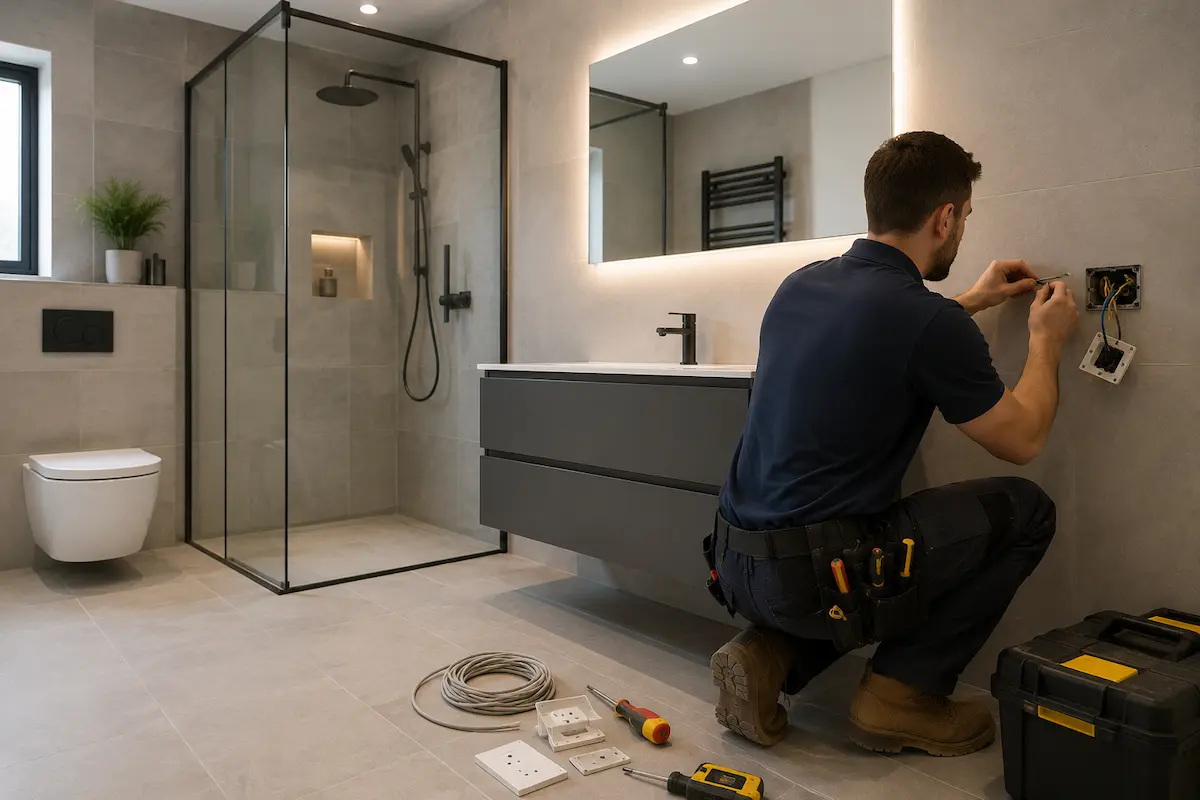
A professional bathroom renovation typically involves more electrical work than most homeowners expect. Here’s a breakdown of what’s commonly included and what each task involves.
Bathroom Lighting Installation
Bathroom lighting must meet strict IP rating requirements depending on its position within the bathroom zones. Lights installed directly above a shower or bath (Zone 1) require a minimum IP65 rating. A qualified electrician will assess the zone positions, select appropriate fittings, wire them to the correct circuit, and certify the installation. Lighting design can range from simple ceiling downlights to more involved layered schemes using wall lighting, mirror lighting, and feature strips.
Extractor Fan Installation
Building Regulations require adequate ventilation in bathrooms, and in most cases this means a mechanical extractor fan. For rooms without an openable window, an extractor fan is mandatory. Where a new circuit or a dedicated wiring run is required, this must be handled by a qualified electrician. The fan must be wired to a suitable switched or sensor-activated supply, positioned correctly for effective extraction, and ducted to the outside of the building.
Heated Towel Rail Wiring
Electric heated towel rails are a popular addition to modern bathrooms. A hardwired electric towel rail requires connection to a fused spur, which in turn connects back to the consumer unit. This is notifiable electrical work and must be carried out and certified by a Part P registered electrician. Dual-fuel towel rails, which can run off both the central heating and an electric element, add an additional layer of installation complexity.
Electric Shower Installation
An electric shower is one of the most significant electrical installations in any bathroom project. It requires a dedicated circuit run directly from the consumer unit, sized correctly for the shower’s kilowatt rating (typically between 7.5 kW and 10.5 kW for modern units). The circuit must include appropriate RCD protection, a correctly rated MCB, and a pull-cord or remote switch positioned outside the bathroom zones. This is major notifiable electrical work that always requires a qualified electrician.
Underfloor Heating Installation
Electric underfloor heating systems consist of heating mats or cables laid beneath the floor covering, connected to a thermostat and from there back to the electrical supply. The installation involves both the physical laying of the heating elements (which is typically done during the flooring installation stage) and the electrical connection and commissioning. The electrical element is notifiable work requiring a qualified installer.
Shaver Socket Installation
A shaver socket in a bathroom must be an isolated shaver supply unit incorporating a transformer, not a standard socket outlet. These are specifically designed for bathroom use and are permitted under the wiring regulations. Where a new supply is required, this must be installed by a qualified electrician. Like-for-like replacement of an existing shaver socket is lower risk but should still be carried out competently.
Mirror Lighting and LED Mirrors
Illuminated bathroom mirrors and LED mirror cabinets are now a standard feature of most modern bathroom designs. Where the mirror requires a hardwired electrical connection, this must be installed to the correct standard for its zone position. Many illuminated mirrors are supplied with a flex and require connection to a suitably positioned fused spur, which again requires qualified electrical work where a new supply point is needed.
Electrical Testing and Certification
Upon completion of any notifiable electrical work, the electrician is required to test the installation and issue the appropriate certification. This confirms the work complies with BS 7671 and Part P of the Building Regulations. The certificate should be kept with your property documents. Some mortgage lenders and insurers will ask to see it, and it will be requested by solicitors during a property sale.
Do Bathroom Fitters Need an Electrician?
Whether a bathroom fitter can do electrics on your project depends entirely on the scope of the electrical work involved. Many straightforward bathroom refurbishments require only minor electrical work. More substantial renovations particularly those involving new shower supplies, new circuits, or underfloor heating require a qualified electrician.
Projects That Require an Electrician
Installing an electric shower on a new dedicated circuit
Adding new lighting circuits
Installing underfloor heating with a new electrical supply
Wiring heated towel rails requiring a new fused spur
Installing extractor fans requiring new wiring runs
Any work at or near the consumer unit
Projects a Bathroom Fitter Can Complete Alone
Complete bathroom renovation where no new circuits are required
Like-for-like replacement of existing fittings on existing circuits
Plumbing, tiling, flooring, joinery, and finishing work
Installation of bathroom furniture and accessories
Working With Certified Electricians
The smoothest bathroom projects are those where the bathroom fitter and electrician work as a coordinated team. This means the first-fix electrical work (chasing in cables, installing back boxes, running circuit cables) is done before walls are plastered and tiled, and the second-fix work (connecting fittings, testing, and certifying) is completed at the end of the project. When we coordinate this in-house, it removes the risk of delays caused by trying to schedule two separate companies around each other.
Part P Certification Explained
Part P certification is issued by an electrician who is a registered member of a government-approved competent person scheme. The main schemes in the UK include NICEIC, NAPIT, and ELECSA. When a registered member completes notifiable electrical work, they self-certify the work, notify the relevant authority on your behalf, and issue you with a certificate. This is the legal record that the work meets current UK electrical regulations.
If you have electrical work done by someone who is not registered, the work can still be made compliant but you will need to notify your local building control and arrange for an inspection, which adds cost and delay. Always ask to see an electrician’s scheme membership before work begins.
Bathroom Electrical Safety and Compliance
Electrical safety in bathrooms is governed by both Part P of the Building Regulations and the IET Wiring Regulations (BS 7671). Understanding the key principles helps you ask the right questions and make sure any work carried out on your home meets the required standard.
Bathroom Electrical Zones
The IET Wiring Regulations divide the bathroom into defined zones that determine what electrical equipment can be installed and where.
Zone 0 is the interior of the bath or shower tray itself. Only equipment specifically designed and rated for immersion (minimum IP67) is permitted here, such as certain underwater lighting.
Zone 1 extends above the bath or shower to a height of 2.25 metres from the floor. Equipment here must have a minimum IP45 rating. Only SELV (Safety Extra Low Voltage) equipment or equipment specifically rated for Zone 1 is permitted.
Zone 2 extends 0.6 metres horizontally beyond Zone 1 and from the floor to 2.25 metres. Equipment here must have a minimum IP44 rating.
Outside the zones is the rest of the bathroom where standard equipment can be used, subject to normal safety requirements including no standard socket outlets within reach of the bath or shower.
RCD Protection
All bathroom circuits must be protected by a Residual Current Device (RCD). An RCD monitors the flow of electrical current and cuts the supply almost instantaneously if it detects a fault such as current flowing through a person. In bathrooms, this protection is mandatory. Modern consumer units typically include RCD protection across all circuits, but this should be verified and confirmed as part of the installation and certification process.
IP Rated Electrical Fixtures
IP (Ingress Protection) ratings define how resistant an electrical fitting is to water and dust. In bathrooms, the zone position of a fitting determines the minimum IP rating required. A reputable electrician will always specify and install correctly rated fittings for their location. Using a standard domestic light fitting in a bathroom shower zone is not only a safety risk it will also fail any competent electrical inspection.
Building Regulations Compliance
All notifiable electrical work in a bathroom must comply with Part P of the Building Regulations. This is not optional guidance it is a legal requirement. Non-compliant electrical work in a property can affect insurance, mortgage, and sale of the property.
Electrical Certificates
There are two main types of electrical certification relevant to bathroom work:
Electrical Installation Certificate (EIC) Issued for new electrical installations or major alterations. This confirms the installation meets BS 7671 and Part P requirements.
Minor Electrical Installation Works Certificate (MEIWC) Issued for smaller additions or alterations to existing circuits. For example, adding a new light fitting to an existing circuit.
Both documents should be kept safely with your property paperwork.
Safe Installation Standards
Safe electrical installation in a bathroom isn’t just about using the right fittings it’s about the quality of the entire installation. Cables must be correctly routed and protected, connections properly made and insulated, circuits correctly sized, and the whole installation tested before use. Cutting corners anywhere in this process introduces risk.

Frequently Asked Questions
Can a bathroom fitter legally carry out electrical work?
This is really asking can a bathroom fitter do electrics within the law and the answer is yes, but only for minor, low-risk tasks on existing circuits. Any notifiable electrical work must be carried out or certified by a Part P registered electrician. A competent bathroom fitting company will either have qualified electricians in-house or work alongside a registered electrician to cover this requirement.
Do I always need an electrician for a bathroom renovation?
Not necessarily. If your renovation involves no new electrical circuits and only like-for-like replacement of existing electrical fittings, a qualified bathroom fitter may be able to handle all the work. However, if any new wiring, new circuits, or changes to the electrical installation are involved which is the case in most full bathroom renovations then a Part P registered electrician must carry out and certify that work.
Can one company provide both bathroom fitting and electrical work?
Yes. Many professional bathroom installation companies either employ qualified electricians directly or work in a close and coordinated relationship with registered electricians. This is actually the ideal arrangement, as it means all trades are managed as part of a single coordinated project rather than separate contracts.
What is Part P certification?
Part P is the section of the UK Building Regulations that covers electrical safety in dwellings. It requires that notifiable electrical work including most electrical work in bathrooms is either carried out by a registered competent person or inspected and certified by building control. When a registered electrician completes the work, they issue an Electrical Installation Certificate and notify the relevant scheme on your behalf. This certificate is your legal proof of compliance.
Can a bathroom fitter install electric showers?
A bathroom fitter can install the physical shower unit fixing it to the wall, connecting the water supply, and fitting the hose and head. However, the electrical connection for an electric shower requires a new dedicated circuit from the consumer unit, which is notifiable electrical work. This part of the installation must be carried out by a Part P registered electrician.
Can a bathroom fitter replace bathroom lighting?
If the replacement is truly like-for-like the same type of fitting, on the same circuit, in the same position then a competent person may be able to carry this out. However, where the replacement involves any new wiring, a change in circuit, or a different type of fitting, or where the work is in a zone that requires specific IP-rated equipment, the involvement of a qualified electrician is strongly advisable. When in doubt, always use a qualified electrician.
Who issues the electrical certificate?
The Electrical Installation Certificate (or Minor Electrical Installation Works Certificate for smaller jobs) is issued by the electrician who carries out the work, provided they are a registered member of a government-approved competent person scheme such as NICEIC, NAPIT, or ELECSA. If the electrician is not registered, the certificate can be issued by a building control officer following an inspection but this route is slower and more costly.
How long does a bathroom installation take?
A straightforward bathroom refurbishment might take three to five days. A full bathroom renovation — stripping out the old room, first-fix plumbing and electrics, tiling, installation, second-fix, and finishing typically takes one to two weeks depending on the complexity of the project, the specification of materials, and whether any structural or drainage work is required.
How much does bathroom electrical work cost?
Costs vary depending on what’s involved. Simple electrical work on an existing circuit may cost a few hundred pounds. A full electric shower installation including a new circuit typically costs £400–£800. More comprehensive electrical installations across a full renovation will cost more. We provide fully itemised quotes so you know exactly what you’re paying for before work begins.
Is bathroom electrical work covered by Building Regulations?
Yes. Bathrooms are classified as a Special Location under the IET Wiring Regulations, and most electrical work in bathrooms is notifiable under Part P of the Building Regulations. This means it must be carried out to the required standard and certified appropriately. Non-compliant electrical work can affect your home insurance, your ability to sell the property, and most importantly, the safety of your household.
Get Your Free Bathroom Fitting Quote Today
If you’ve been asking yourself can a bathroom fitter do electrics for your upcoming renovation, the answer is clear: some tasks yes, but anything notifiable requires a qualified, registered electrician and that’s exactly what we provide as part of our complete bathroom fitting service.