
If a bathroom fitter damaged your house during installation, the first thing to know is that you are not stuck with the cost. Under UK consumer law, any fitter carrying out work in your home owes you a duty of care, and they are responsible for putting right any damage caused by their work. We provide bathroom fitting services in Wolverhampton, and because we regularly speak with homeowners who have had a difficult experience elsewhere, we have built our entire installation process around protecting your home from the very first visit, not just patching things up after the fact.
This guide walks through everything you need to know if you are dealing with a bathroom fitter who damaged your house, what your rights actually are, the practical steps to take, and how a properly run bathroom fitting service prevents this situation from happening in the first place.
Why Bathroom Fitting Carries More Risk Than Other Home Improvement Jobs
A kitchen refit or a living room redecoration mostly involves dry, open space and straightforward access. A bathroom is a different environment entirely. It is usually the smallest room in the house, packed with plumbing runs, electrical circuits, tiled surfaces, and water sensitive materials, all within a few square metres. There is very little margin for error.
When a bathroom fitter removes an old suite, strips tiling, or repositions pipework, the surrounding surfaces are constantly at risk. A heavy cast iron bath being dragged across a tiled floor, a stud wall being cut into without checking what is behind it, or a water supply being disconnected incorrectly can all cause damage that goes well beyond the bathroom itself. Ceilings in the room below, flooring in hallways used to carry materials in and out, and even electrical circuits elsewhere in the property can be affected if a job is rushed or handled carelessly.
This is exactly why protecting the home before work even begins matters as much as the quality of the finished bathroom. A skilled fitter treats preparation as part of the job, not an optional extra.
Common Examples of a Bathroom Fitter Damaging a House
Knowing what typically goes wrong helps you recognise whether what happened in your home falls under fitter responsibility, or whether it is something separate like pre-existing wear. Based on patterns reported by homeowners across forums, consumer advice sites, and trade disputes, the most frequent issues include:
Cracked or Chipped Bathtubs and Shower Trays
This usually happens when old wall tiles are removed without covering the bath or tray underneath. Falling tile fragments, dropped tools, or careless removal of adhesive can chip enamel or crack acrylic surfaces that are expensive to replace.
Scratched or Stained Flooring
Materials being dragged across hallways and landings, heavy equipment left on unprotected floors, or spilled grout and adhesive can leave lasting marks on flooring well outside the bathroom itself.
Water Leaks During or After Installation
A poorly fitted shower valve, an incorrectly sealed waste pipe, or a rushed first fix plumbing job can lead to leaks that show up days or weeks later, often appearing as a stain on the ceiling of the room below.
Damaged Pipework or Electrics
Cutting into a wall without checking what runs behind it is one of the more serious risks. This can affect water supply lines, central heating pipework, or electrical cabling, sometimes causing damage that is not immediately visible. This risk is especially relevant for ensuite fitting projects, where pipework and wiring routes are often tighter and less visible.
Misaligned Shower Screens or Poor Sealant Work
A screen that sits slightly outside the line of the tray, or a sealant joint that has not been applied correctly, can allow water to escape onto flooring outside the shower area, leading to gradual damage over time. Wet room installations carry a similar risk if tanking and falls to the drain aren’t done correctly the first time.
Cracked Plaster or Marks on Walls
Equipment being moved through tight spaces, tools resting against painted surfaces, or general carelessness during demolition can leave marks, dents, or cracked plaster that were not part of the original agreed scope of work.
If any of this sounds familiar, you are not imagining it, and you are not alone. Homeowner forums and consumer advice services receive a steady stream of similar complaints, which tells you this is a known and recognised issue within the trade, not an isolated incident.
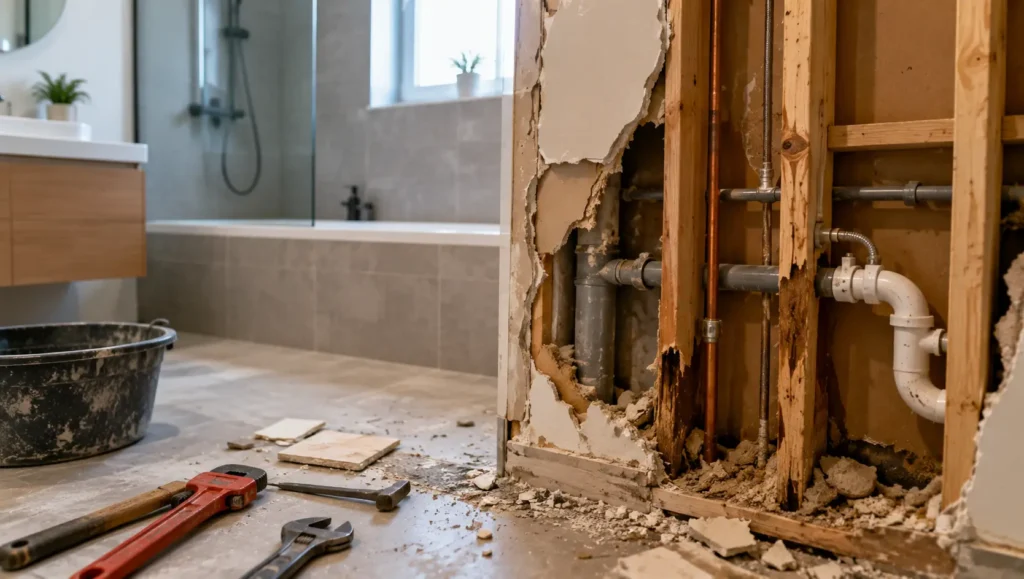
What To Do If a Bathroom Fitter Has Already Damaged Your House
If you are currently dealing with damage caused during a bathroom installation, here is the order most consumer advisers, surveyors, and legal sources recommend following.
Step One: Document Everything Immediately
As soon as you notice damage, take clear photographs from multiple angles. Capture both wide shots showing the full room or area, and close up images of the specific damage. Note the exact date you discovered the issue, and if possible, the date you believe it occurred. This timeline matters if the situation later needs to go further.
Keep every text message, email, or written note exchanged with the fitter from this point onward. Verbal conversations are easy to dispute later, while a written record is not.
Step Two: Raise the Issue Directly and in Writing
Send a clear, factual message to the fitter describing what happened, including the photographs you have taken. Avoid emotional or accusatory language at this stage. Simply state what you found, when you found it, and what you are asking them to do about it.
Most fitters who run a legitimate business will want to resolve this quickly. Reputation matters in this trade, and a fitter aware of their legal obligations under the Consumer Rights Act will usually understand that ignoring the issue creates a bigger problem for them than addressing it.
Step Three: Check Their Insurance Details
A properly run bathroom fitting business carries public liability insurance specifically for situations like this. Ask the fitter for their insurance provider’s details. If they are reluctant to share this, it is a significant warning sign about how seriously they take their responsibilities.
If the fitter accepts that damage occurred but is slow to act, you can contact their insurer directly to report the issue and begin a claim, even while continuing to communicate with the fitter themselves.
Step Four: Get an Independent Assessment if There Is a Dispute
If the fitter denies responsibility, or disputes that the damage relates to their work, an independent surveyor or qualified tradesperson can inspect the issue and provide a written opinion. This neutral assessment carries weight if the dispute escalates, and many homeowners find that simply requesting one encourages a faster resolution.
Step Five: Understand Your Legal Position
Under the Consumer Rights Act 2015, any service carried out in your home, including bathroom fitting, must be performed with reasonable care and skill, within a reasonable time, and at a reasonable cost unless otherwise agreed. If a fitter’s work falls short of this standard and causes damage, you have a legal basis to request repair, replacement, or financial compensation.
It is worth knowing that standard home insurance policies typically exclude accidental damage caused during renovation work. This is precisely why the fitter’s own liability insurance, rather than your own home policy, is usually the correct route for resolving the cost of repairs. Under the Consumer Rights Act 2015, any service carried out in your home
Step Six: Consider Small Claims Court as a Last Resort
If informal resolution and insurance routes do not work, small claims court is available for most domestic disputes involving amounts up to a set financial threshold. Many homeowners successfully resolve these cases without needing a solicitor, particularly when supported by clear documentation, photographs, and a written timeline of events.
Why Hiring the Right Bathroom Fitter Matters More Than the Price Tag
It is tempting to choose a bathroom fitter based purely on the lowest quote. However, the cheapest price often reflects rushed timelines, fewer protective measures, and less experienced labour, all of which increase the risk of exactly the kind of damage described above.
A bathroom fitter who genuinely understands the trade treats protection of your home as a non negotiable part of every job, regardless of budget. This includes covering floors and surfaces before any demolition begins, isolating water supplies correctly before first fix plumbing starts, and taking the time to plan how materials and waste will move through your home without scuffing walls or damaging flooring along the route. If your current layout is part of the problem, a proper bathroom remodeling can also reduce the risk of future damage by correcting poor original planning
How We Protect Your Home During Every Bathroom Installation
Because we understand exactly how stressful it is to deal with a bathroom fitter who damaged your house, we have built our entire process around preventing that situation from ever arising.
Every job we undertake begins with full floor and surface protection before a single tool is used, and this protection extends beyond the bathroom itself to cover the route materials and waste will travel through your home, including hallways, stairs, and landings. Our team isolates water supplies properly before any plumbing work begins, significantly reducing the risk of leaks reaching ceilings or walls in rooms below the bathroom.
We also photograph the condition of fixtures, flooring, walls, and surrounding areas before starting any work, creating a clear and dated record of the room’s original state. This protects both you and us, and means there is never any ambiguity about what existed before the job began.
Every fitter we send to your home is fully insured with public liability cover, giving you complete peace of mind even in the unlikely event that something unexpected occurs. We also believe in clear communication throughout the job, so you are never left wondering what stage the work is at or what happens next.
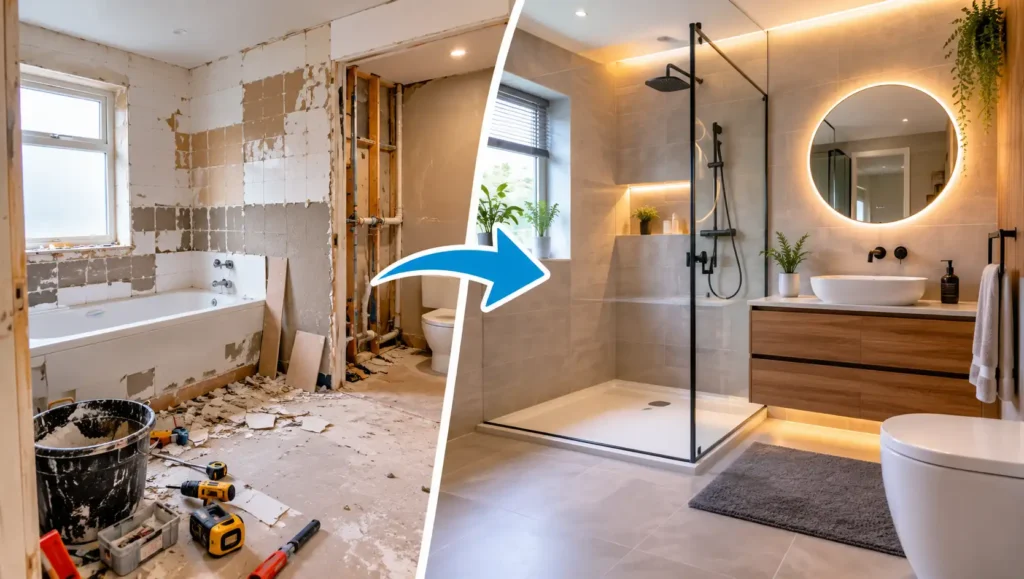
What a Properly Scoped Bathroom Fitting Quote Should Include
One of the best ways to avoid problems before they start is to insist on a properly itemised quote rather than a vague lump sum figure. A trustworthy quote should clearly outline the scope of demolition and removal, the plumbing and electrical work involved, the tiling and waterproofing requirements, and the specific fixtures, brands, and models being installed. It should also state a realistic timeline, a payment schedule tied to project milestones rather than a large upfront deposit, and confirmation of insurance and any relevant trade certifications.
A fitter who is unwilling or unable to provide this level of detail is often signalling that the planning behind the job has not been done properly, which increases the likelihood of mistakes, delays, and potential damage further down the line. Careful bathroom planning from the outset is one of the simplest ways to prevent the kind of costly mistakes covered in this guide.
Why Wolverhampton Homeowners Choose Us for Bathroom Fitting
We have fitted bathrooms across Wolverhampton and the surrounding areas for a considerable time, and one piece of feedback we hear consistently from new customers is that a previous experience with another fitter left them anxious about hiring anyone again. That hesitation is completely understandable, and closing that gap is exactly what our process is designed to do.
Our quotes are fixed and fully itemised before any work begins, so there are no surprises partway through the job. Our timelines are realistic rather than overly optimistic, which means fewer rushed decisions and a lower risk of careless mistakes. Most importantly, our fitters approach every home the way they would want their own treated, with care, patience, and respect for the property they are working in.
Frequently Asked Questions About Bathroom Fitters and Property Damage
What should I do immediately if I notice my bathroom fitter damaged my house?
Photograph the damage straight away from multiple angles, note the exact date you discovered it, and raise it with the fitter in writing rather than only discussing it verbally. This creates a clear record that protects you if the situation needs to be escalated later.
Is a fitter legally responsible for damage caused during a bathroom installation?
Yes. Under the Consumer Rights Act 2015, work carried out in your home must be performed with reasonable care and skill. If a fitter’s negligence results in damage to your property, they are generally liable to repair the damage or provide financial compensation.
Will my home insurance cover damage caused by a bathroom fitter?
Usually not directly. Most standard home insurance policies exclude accidental damage caused during renovation or installation work. This is why the fitter’s own public liability insurance is typically the correct route for resolving a damage claim, rather than your personal home insurance policy.
How long does a fitter have to fix damage once it has been reported?
There is no fixed legal deadline, but a reasonable timeframe is generally expected. Many homeowners give a fitter a written deadline of fourteen days to respond or begin repairs before considering further action such as contacting an insurer or pursuing small claims court.
Can I withhold final payment if my bathroom fitter caused damage?
This depends on the terms of your agreement and the nature of the dispute. In many cases, homeowners are advised to address damage as a separate issue from the agreed payment for completed work, although unresolved disputes are sometimes used as leverage during negotiation. Seeking advice from a consumer rights service or solicitor is recommended if this situation becomes complicated.
How do I avoid hiring a fitter who might damage my home?
Ask directly about the protective measures they take before starting work, request proof of public liability insurance, and look for reviews that specifically mention how clean, careful, and tidy their previous installations were, rather than focusing only on the finished appearance of the bathroom.
What is the difference between accidental damage and poor workmanship?
Accidental damage typically refers to a one off incident, such as a dropped tool cracking a tile. Poor workmanship refers to a pattern of substandard work, such as incorrect sealant application or improperly fitted pipework, which may lead to ongoing or repeated damage over time. Both are generally covered under a fitter’s duty of care, but the evidence required to support a claim can differ.
Should I get a second opinion before agreeing on the cost of repairs?
If the cost of repairing the damage is significant, or if the fitter disputes responsibility, getting an independent assessment from a qualified surveyor or tradesperson is a sensible step. This provides an impartial, written opinion that can support your position if the dispute needs to be resolved formally.
Planning a Bathroom Refit and Concerned About the Risk of Damage?
You should never have to choose between getting the bathroom you want and worrying about the condition your home will be left in afterward. If you are considering a bathroom installation in Wolverhampton and want the reassurance of working with a fitter who takes property protection seriously from the very first visit, we would be glad to talk you through exactly how our process works. Working with a Bathroom Fitters Wolverhampton team that takes property protection seriously

Get in touch today for a free, no obligation quote, and we will walk you through our full scope of work, our protective measures, and a realistic timeline before you commit to anything.